
Choosing the Right Paper Stock – A Deeper Dive into the World of Printing

Every business owner in Orange County knows that first impressions matter. Whether you’re handing out business cards at a networking event in Irvine Spectrum or distributing brochures at the OC Fair, the paper stock you choose speaks volumes before anyone reads a single word. Yet many businesses overlook this crucial decision, treating paper selection as an afterthought rather than the strategic choice it truly is.
At Forest Printing in Laguna Hills, we’ve seen firsthand how the right paper stock can elevate a simple flyer into a memorable marketing piece, or transform basic business cards into conversation starters. After serving Orange County businesses since 1979, we’ve learned that paper selection isn’t just about aesthetics—it’s about creating tangible connections with your customers that digital marketing simply can’t replicate.
Understanding Paper Weight and Thickness for Your Business Needs
Paper weight might seem like industry jargon, but it’s actually one of the most important factors in your printing decisions. In the United States, paper weight is measured in pounds (lb), referring to the weight of 500 sheets in the paper’s standard size. This system can be confusing because different paper categories use different standard sizes.
For business card printing in Orange County, most professionals choose between 14pt and 16pt cardstock. The 14pt option (approximately 300gsm) provides substantial thickness at a competitive price point, typically running $50-80 per 1,000 cards. The 16pt option (approximately 350gsm) offers premium thickness that immediately conveys quality—perfect for real estate agents in Newport Beach or financial advisors in Mission Viejo who need to project stability and success.
When it comes to brochures and flyers, the weight considerations shift. A tri-fold brochure for a restaurant in downtown Laguna Beach might work beautifully on 100lb gloss text (approximately 150gsm), which provides enough body to stand up in a display rack while remaining easy to fold. For single-sheet flyers distributed at South Coast Plaza or The Shops at Mission Viejo, 80lb text often provides the ideal balance of quality and cost-effectiveness.
Common Paper Weights by Application
- Business Cards: 14pt to 32pt cardstock (300-700gsm)
- Brochures: 80lb to 100lb text (120-150gsm)
- Flyers: 60lb to 100lb text (90-150gsm)
- Letterhead: 24lb to 32lb writing (90-120gsm)
- Posters: 100lb text to 14pt cardstock (150-300gsm)
- NCR Forms: 20lb bond (75gsm) for multi-part forms
Temperature and humidity in coastal Orange County can affect paper performance. Thinner stocks may curl in our marine layer moisture, while extremely thick stocks might crack when folded. Our G7-certified color management process accounts for these local conditions, ensuring consistent results whether you’re printing in June gloom or October heat.
Choosing Between Coated and Uncoated Paper Stocks
The coating on paper dramatically affects both appearance and functionality. Coated papers have a clay or polymer layer applied to the surface, creating a smooth finish that enhances color vibrancy and detail. Uncoated papers retain their natural fiber texture, offering a more organic feel and better writability.
Coated papers excel for custom brochure printing where image quality is paramount. A glossy coated stock makes food photography pop for restaurant menus, while property photos shine on real estate flyers. The coating prevents ink from soaking into the paper fibers, resulting in sharper images and more vibrant colors. This is why most retail businesses in Fashion Island or The District choose coated stocks for their promotional materials.
Uncoated papers offer distinct advantages for certain applications. They accept pen and pencil marks easily, making them ideal for appointment cards, response forms, or any piece requiring customer interaction. The tactile quality of uncoated paper also conveys authenticity and craftsmanship—perfect for artisan businesses in Laguna Beach’s gallery district or organic restaurants in Costa Mesa.
Coating Options and Their Best Uses
- Gloss Coating: Maximum shine and color pop, ideal for photo-heavy designs
- Matte Coating: Sophisticated finish with reduced glare, perfect for text-heavy pieces
- Satin/Silk Coating: Balance between gloss and matte, versatile for mixed content
- Soft Touch Coating: Velvet-like texture, premium option for luxury brands
- UV Coating: Ultra-high gloss with durability, excellent for business cards
Consider your brand positioning when choosing coatings. A tech startup in Irvine Spectrum might choose sleek UV-coated business cards to convey innovation, while a wellness center in San Juan Capistrano might prefer uncoated recycled stock to emphasize natural values. Request a free quote to explore coating options with paper samples.
Specialty Papers That Make Your Brand Stand Out
Beyond standard white stocks, specialty papers offer unique ways to differentiate your brand in Orange County’s competitive market. These distinctive options can transform ordinary print pieces into memorable brand experiences that recipients keep rather than discard.
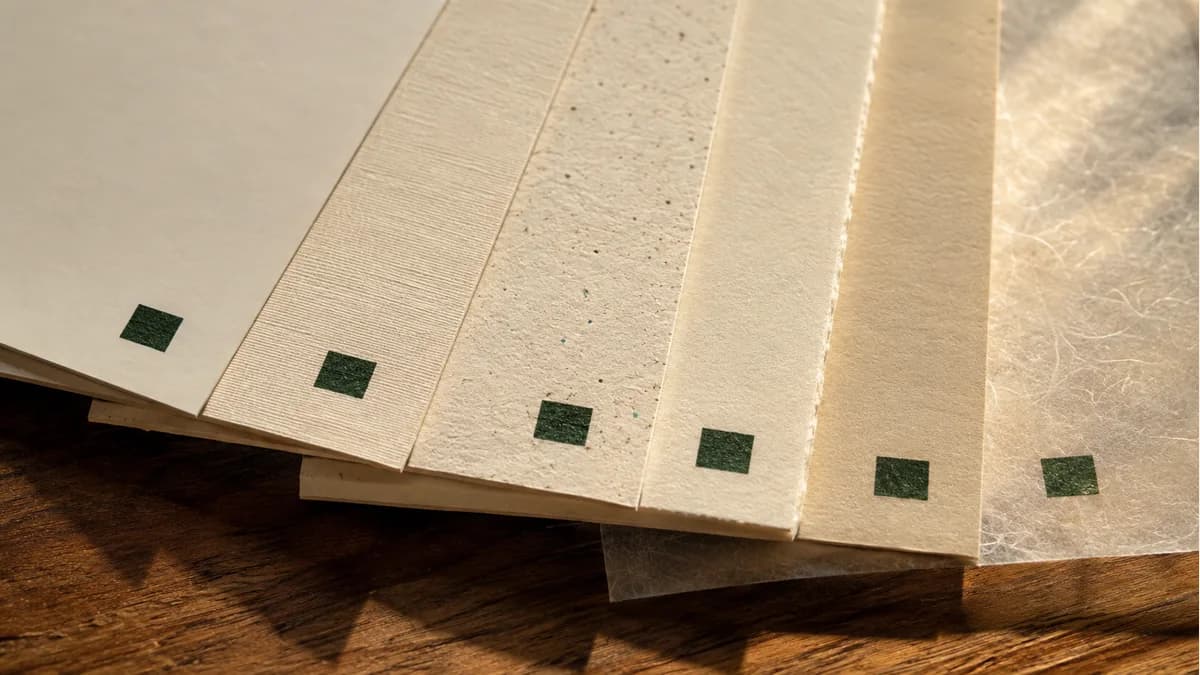
Textured papers add a tactile dimension that engages multiple senses. Linen finish provides subtle crosshatch texture reminiscent of fine fabric—popular among law firms in Newport Center and wedding planners throughout South County. Laid finish features parallel lines that evoke traditional craftsmanship, while felt finish offers a soft, luxurious surface perfect for spa brochures or boutique hotel collateral.
Colored papers eliminate the need for full-coverage printing while creating instant visual impact. Kraft brown stocks work beautifully for organic brands and farmers market vendors, while deep black papers with white or metallic ink create dramatic effects for nightclubs and upscale restaurants. Pastel stocks in coral or seafoam complement coastal businesses from Huntington Beach to Dana Point Harbor.
Popular Specialty Stock Options
- Pearl Metallic: Shimmering finish that catches light, adds 25-30% to standard pricing
- Cotton Papers: 25-100% cotton content, prestigious feel for executive stationery
- Recycled Stocks: 30-100% post-consumer content, appeals to eco-conscious customers
- Synthetic Papers: Waterproof and tear-resistant, perfect for outdoor menus or tags
- Translucent Vellum: Semi-transparent elegance for overlays and invitations
Specialty papers typically add 20-50% to your printing costs but can dramatically increase perceived value. A mortgage broker using pearl metallic business cards or a sustainable fashion boutique choosing 100% recycled stock makes a statement that aligns with their brand values and justifies premium pricing.
Environmental Considerations in Paper Selection
Orange County businesses increasingly prioritize sustainability, and paper choice plays a significant role in environmental impact. Understanding eco-friendly options helps you make responsible choices without sacrificing quality or appearance.
Recycled papers have evolved far beyond the gray, rough stocks of decades past. Modern recycled papers offer brightness and smoothness comparable to virgin stocks while reducing environmental impact. Papers with 30% post-consumer waste (PCW) content provide a good entry point, while 100% PCW options make the strongest environmental statement. Forest Stewardship Council (FSC) certification ensures virgin fibers come from responsibly managed forests.
Alternative fiber papers push sustainability even further. Bamboo grows rapidly without pesticides, creating papers with natural antimicrobial properties. Hemp fiber produces strong, durable paper with less processing than wood pulp. Agricultural waste papers made from sugarcane bagasse or wheat straw turn byproducts into beautiful printing substrates.
Sustainability Certifications to Look For
- FSC Certified: Ensures responsible forest management practices
- SFI Certified: Sustainable Forestry Initiative standards
- Green-e Certified: Renewable energy used in production
- Processed Chlorine Free (PCF): No chlorine bleaching for recycled content
- Carbon Neutral: Offset programs balance production emissions
Many Orange County municipalities and organizations now require or prefer certified sustainable papers. HOAs from Coto de Caza to Leisure World often specify recycled content for their community mailings. Schools throughout the Capistrano and Saddleback Valley districts increasingly choose eco-friendly options for their printed materials.
Matching Paper Stock to Your Industry and Application
Different industries have established paper preferences based on practical needs and customer expectations. Understanding these conventions helps you choose stocks that resonate with your target audience while potentially standing out through thoughtful variations.
Real Estate professionals in Orange County typically choose heavy cardstock for business cards (16pt minimum) and high-quality coated stocks for property flyers. Luxury properties in Newport Coast or Pelican Hill demand premium papers—consider soft-touch coating or pearl metallic stocks. For real estate printing needs, durability matters since materials often sit in outdoor brochure boxes exposed to coastal moisture.
Restaurants face unique challenges with frequent handling and potential spills. Synthetic papers or heavy laminated stocks work well for menus that see daily use. Disposable menus might use lighter stocks (60-80lb text) to manage costs while maintaining quality. Many Orange County restaurants now use QR code table tents on durable stocks, reducing menu printing while maintaining branded touchpoints.
Healthcare providers balance professionalism with approachability. Uncoated stocks work well for forms requiring signatures, while coated stocks showcase facility photos and physician credentials. Appointment cards need durability—14pt minimum—since patients carry them for weeks. Medical practices in Hoag Hospital’s network often coordinate paper choices for consistency across locations.
Industry-Specific Recommendations
- Legal/Financial: Classic white or cream, substantial weight, often watermarked
- Creative Agencies: Unique textures, bold colors, innovative finishes
- Nonprofits: Recycled content, cost-effective options, mission-aligned choices
- Retail: High-gloss coatings, vibrant color reproduction, attention-grabbing finishes
- B2B Services: Professional appearance, writable surfaces for notes, moderate weights
Cost Considerations and Budget Optimization
Paper typically represents 30-40% of your total printing cost, making stock selection crucial for budget management. Understanding price relationships helps you invest wisely in papers that deliver maximum impact for your marketing dollars.
Standard 80lb gloss text for flyers costs approximately $0.08-0.12 per sheet in quantities of 1,000, while premium stocks like 16pt silk laminated cards can reach $0.25-0.35 per piece. The key is identifying where premium paper delivers ROI. Business cards justify higher paper costs since they’re kept longer and create lasting impressions. Event flyers might use standard stocks since they’re often discarded after use.
Bulk ordering provides significant savings on paper costs. Ordering 5,000 pieces instead of 1,000 typically reduces per-unit costs by 40-50%. For businesses with predictable needs—like NCR forms for contractors or appointment cards for medical offices—planning quarterly orders maximizes savings while ensuring consistent availability.
Smart Budget Strategies
- House Stocks: Using our standard inventory papers saves 15-20% versus special orders
- Gang Runs: Combining multiple pieces on one sheet reduces waste and cost
- Standard Sizes: Avoiding custom cuts eliminates trimming charges
- Digital vs. Offset: Short runs under 500 pieces often cost less on digital presses
- Seasonal Planning: Ordering during slower periods may qualify for discounts
Technical Specifications for Optimal Print Results
Achieving professional results requires matching paper characteristics to your design and printing method. Our G7-certified color management ensures consistent results, but understanding technical considerations helps you make informed choices during the design phase.
Ink coverage affects paper selection significantly. Designs with heavy coverage or dark backgrounds perform better on coated stocks that prevent ink absorption. Uncoated papers require 15-20% more ink to achieve similar color density, potentially affecting both appearance and cost. For photographs, coated papers reproduce fine details and subtle color gradations more accurately.
Paper grain direction matters for folded pieces. Folding against the grain can cause cracking, especially on heavier stocks. Our prepress team identifies potential issues and recommends adjustments. For perfect-bound booklets, grain must run parallel to the spine for proper adhesion and durability.
Critical Technical Factors
- Opacity: Prevents show-through on double-sided printing, crucial for thin stocks
- Brightness: Affects color perception and contrast, measured on 0-100 scale
- Smoothness: Impacts fine detail reproduction and coating adhesion
- pH Level: Acid-free papers (pH 7.0+) prevent yellowing over time
- Moisture Content: Affects dimensional stability and curl resistance
Digital printing technologies have expanded paper options significantly. Our digital presses handle stocks from 60lb text to 130lb cover, enabling cost-effective short runs on premium papers. Variable data printing for HOA mailings works seamlessly on both coated and uncoated stocks, maintaining CASS certification requirements.
Making Your Final Paper Selection
Choosing the right paper stock combines practical requirements with brand strategy and budget realities. Start by defining your project’s primary goal—generating leads, building credibility, or facilitating transactions. This clarity guides subsequent decisions about weight, coating, and special features.
Request paper samples before committing to large orders. Viewing actual printed pieces on different stocks provides insights that spec sheets can’t convey. We maintain an extensive sample library featuring real projects from Orange County businesses, demonstrating how various stocks perform with different design styles.
Consider your complete marketing ecosystem when selecting papers. Business cards, letterhead, and brochures don’t need identical stocks, but they should feel cohesive. A tech company might use 16pt UV-coated cards, 100lb silk brochures, and 24lb smooth letterhead—different weights and finishes unified by consistent quality and modern aesthetic.
Testing remains crucial for critical projects. Short digital runs on multiple stocks let you evaluate options economically. This approach particularly benefits businesses entering new markets or launching premium services where paper quality directly impacts perceived value.
The right paper stock transforms ordinary printed pieces into powerful marketing tools that engage customers and reinforce your brand. Whether you’re printing business cards for networking at the Irvine Chamber of Commerce or designing brochures for Fashion Island shoppers, thoughtful paper selection maximizes your investment’s impact. From our Laguna Hills location, Forest Printing has helped Orange County businesses make smart paper choices since 1979. Our expertise in matching stocks to specific applications, combined with G7-certified color management and competitive pricing, ensures your printed materials make the impression you intend. Get your free printing quote today and discover how the right paper choice can elevate your brand above the competition.
