
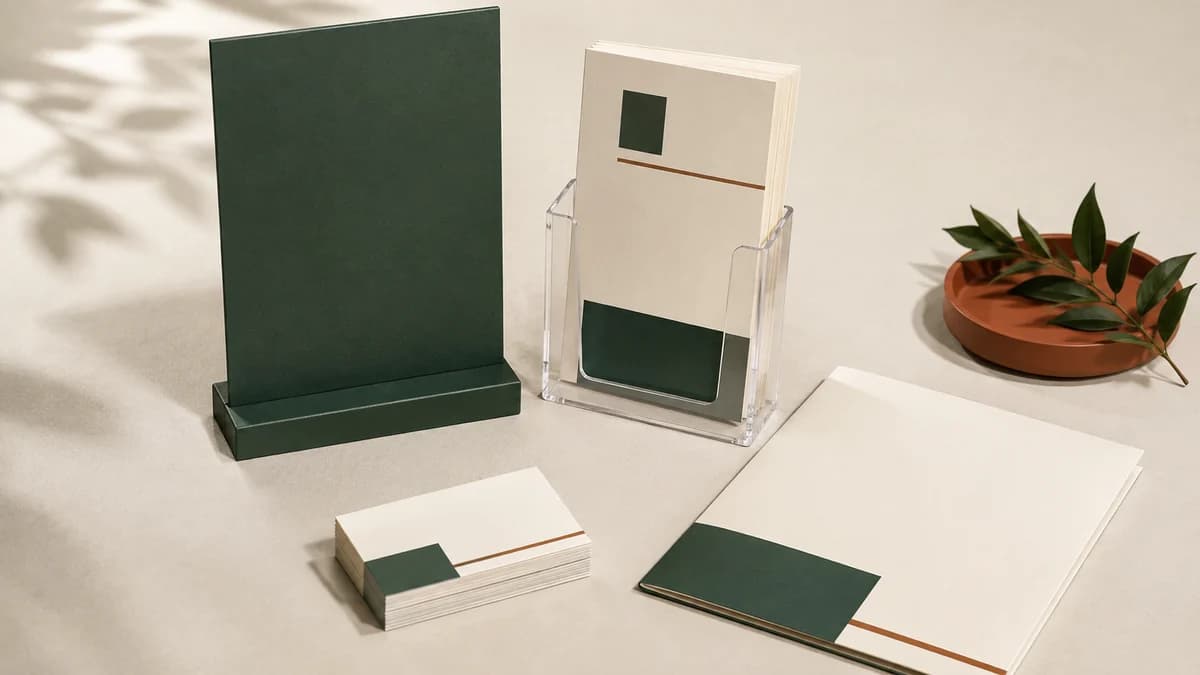
Assign each piece a role in the booth
A display introduces the business from the aisle. A counter piece can support a conversation. A handout gives an interested visitor something useful to take away. They don’t all need to contain the same information.
Choose the message and next step for each position before deciding how many graphics to order. Leave detailed explanations to a format people can read comfortably.
Start with the space and existing hardware
Get the booth dimensions and the event’s current exhibitor requirements. Check height limits, obstructions, access and any restrictions relevant to the proposed display.
If you own a stand or frame, identify its model and graphic template. A replacement graphic needs to fit the actual hardware. Include the assembled footprint as well as the printed dimensions when planning the space.
Prepare a display brief
- Describe where each graphic will be positioned and viewed.
- List the finished dimensions and hardware requirements.
- Supply approved artwork and current contact information.
- Identify what is reused and what must be newly supplied.
- State the packing, transport and handoff requirements.
For banners and signs, keep essential information clear of hardware and edges. For other large-format graphics, confirm the material and construction for that placement.
Review the layout from the visitor’s position
A proof viewed closely on a screen can hide a crowded display. Review the main message in relation to its intended viewing distance, and consider furniture or people that may obscure the lower part.
Check the source artwork for the finished size. Test any printed link or code and make sure the destination supports the conversation you want to have.
Plan assembly and transport as part of the job
Use the event’s actual receiving and setup instructions rather than a general trade-show timeline. Confirm who receives the shipment or collects the order, how it is packed, and when it must be ready.
If practical, check the assembled kit before traveling. Keep the graphic specification and hardware information together so a future replacement can be assessed accurately.
Keep reusable information separate
An evergreen company display and an event-specific insert may have different replacement cycles. Review dates and contact details before each use. After the event, record which materials were used and what questions visitors asked; that evidence can guide the next kit without attributing every lead to the display.