
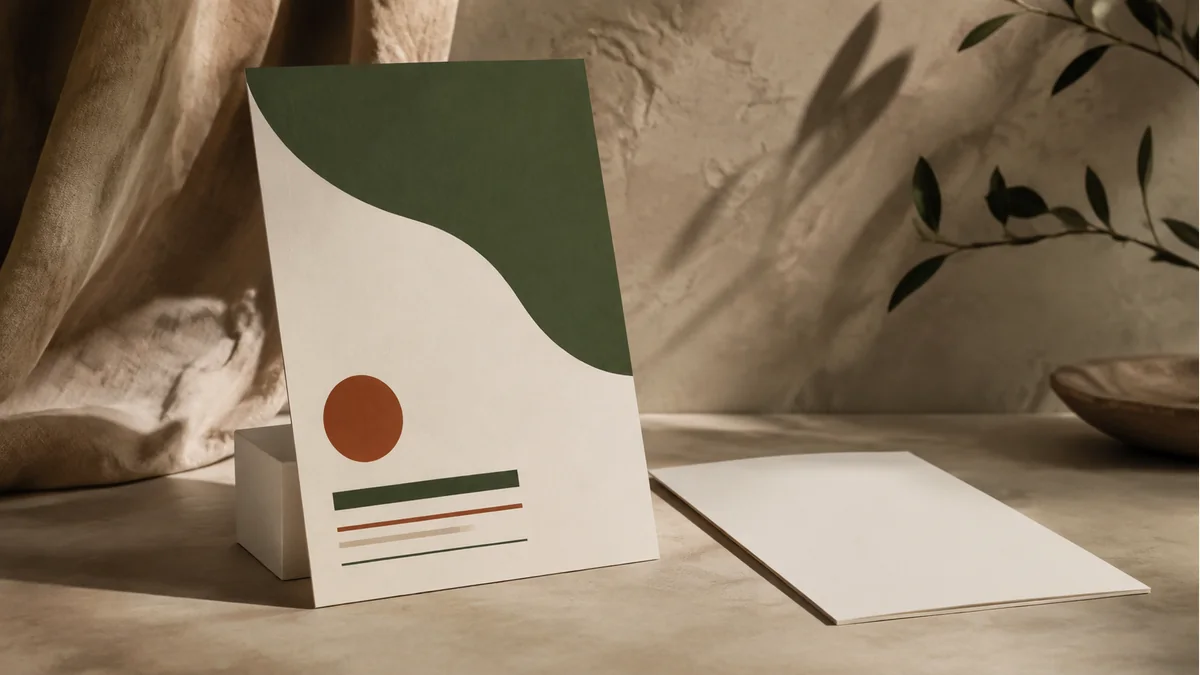
Decide what someone should understand first
Write the main message before arranging the page. Explain the event, offer or service in words the intended reader can understand quickly. Use claims and terms the business has approved.
Put supporting detail in a clear order. A flyer for an event may need a date, location and booking instruction. A service handout may need an explanation of who it is for and how to ask a question.
Choose a format for distribution
A letter-size flyer, half-sheet or smaller handout gives you a different amount of space. Common dimensions such as 8.5 by 11 inches, 5.5 by 8.5 inches and 4 by 6 inches are examples to compare, not a reason to fill every available inch.
Explain whether the flyer will be handed out, inserted into a packet, placed in a holder or mailed. Confirm any holder dimensions and distribution permissions. Mailing needs a separate review of the complete piece and proposed service.
Make the layout easy to scan
- Give the main message a clear visual position.
- Group related details, such as the date and location.
- Leave enough space between sections to distinguish them.
- Keep the next step readable and specific.
Print a draft at the intended size to review the copy. If the information won’t fit comfortably, shorten or reorganize it before shrinking all the text. Ask the shop which artwork requirements apply to the final file.
Select paper for the use
Compare the proposed stock and surface with the artwork. Consider handling, glare and whether anyone needs to write on the piece. If writing matters, test an appropriate sample with the intended pen.
A fold changes both construction and reading order. Identify the flat and finished sizes rather than treating a folded piece as a flat flyer with an extra production step.
Proof the information people will act on
Check dates, times, location details, contact information and approved offer terms. Follow any printed web address or QR code from the proof. Confirm that the destination contains the information the flyer promises.
Order a quantity tied to a realistic distribution plan before the information expires. Keep the approved file and note where the flyers were used. Recorded inquiries can inform the next run, but the number printed alone doesn’t measure a campaign result.