
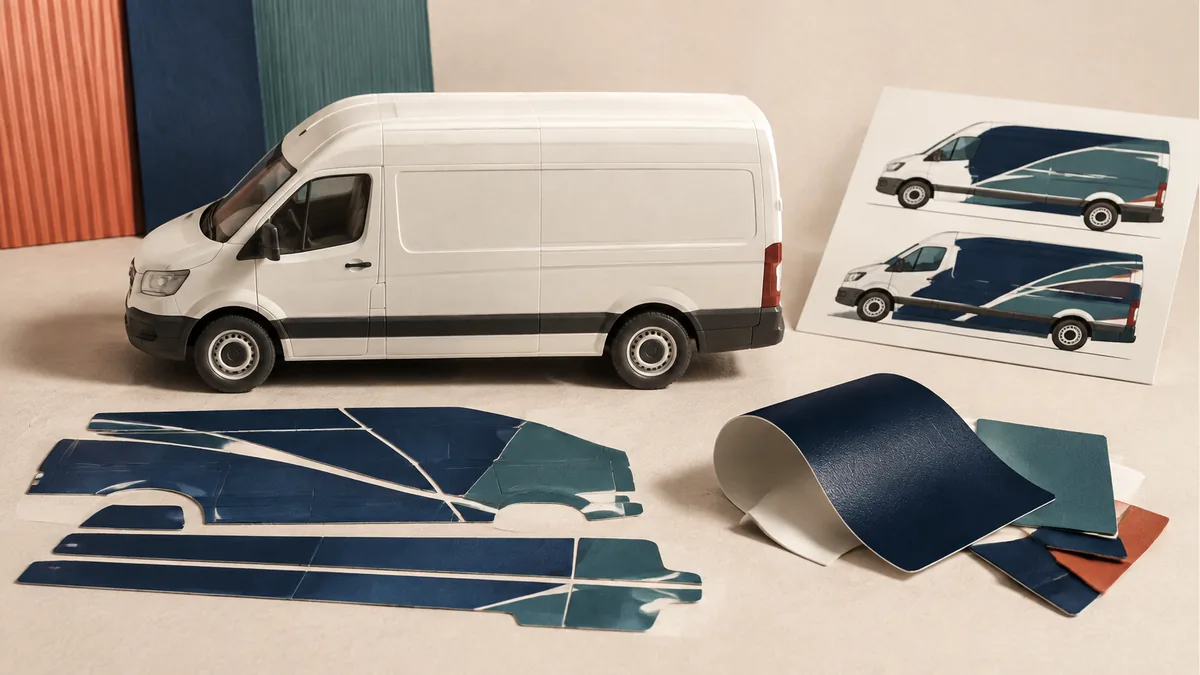
Vehicle Wrap Advertising Impact

Your company vehicle sits in traffic on the 405 near Irvine Spectrum, surrounded by thousands of potential customers. But is it working for you, or is it just another anonymous car in the Orange County rush hour? For businesses throughout South Orange County, from Lake Forest to Newport Beach, vehicle wraps have become one of the most cost-effective forms of advertising available — delivering up to 70,000 impressions per day according to the Outdoor Advertising Association of America.
As a family-owned commercial printing company serving Orange County since 1979, we’ve wrapped everything from single sales vehicles to entire contractor fleets. The difference between a wrap that generates leads and one that simply looks pretty comes down to strategic planning, quality execution, and understanding how mobile advertising works in our unique Southern California market.
Strategic Design Principles for Maximum Impact
Effective vehicle wrap design isn’t about cramming every piece of information onto your vehicle — it’s about creating a mobile billboard that communicates instantly. Studies show that viewers have approximately 3-7 seconds to absorb your message as you drive past, which means every design element needs to earn its place.
Start with your core message hierarchy. Your company name and primary service should dominate the design, readable from at least 50 feet away. For Orange County businesses, this often means choosing high-contrast color combinations that stand out against our typically sunny backdrop. A plumbing company in Mission Viejo, for instance, might use bold blue and white to ensure visibility whether parked at a job site or driving down Marguerite Parkway.
Typography plays a crucial role in wrap effectiveness. Sans-serif fonts like Arial or Helvetica maintain readability at highway speeds, while script fonts should be reserved for accent elements only. We recommend keeping text to a minimum: company name, primary service, phone number, and website. Remember, interested viewers can always look you up online later — your wrap’s job is to make them want to.
Consider how your wrap will appear in different contexts. A professionally designed vehicle wrap should look equally impressive whether it’s parked at South Coast Plaza, driving through downtown Laguna Beach, or sitting in traffic on the 5 freeway. This means avoiding designs that rely on perfect viewing angles or specific lighting conditions.
Material Selection and Durability Considerations
The Southern California sun that makes Orange County such an attractive place to live and work also presents unique challenges for vehicle graphics. UV exposure, salt air near coastal areas like Dana Point and Huntington Beach, and temperature fluctuations all affect wrap longevity. That’s why material selection is critical to your investment’s success.
Professional-grade cast vinyl films from manufacturers like 3M and Avery Dennison offer 5-7 year durability when properly installed and maintained. These materials feature air-release technology that prevents bubbling and ensures smooth application, even on complex curves. For businesses operating primarily inland, such as those in Anaheim or Fullerton, standard cast vinyl provides excellent performance. Coastal operations might benefit from marine-grade options with enhanced UV protection.
Lamination adds another layer of protection and can extend wrap life by 2-3 years. Gloss lamination enhances color vibrancy — perfect for retail businesses wanting maximum visual pop. Matte finishes reduce glare and convey sophistication, making them popular with professional services firms in areas like Irvine’s business district. Some companies even opt for specialty finishes like carbon fiber or brushed metal effects to differentiate their fleet.
Don’t overlook the importance of proper surface preparation. Professional installation includes thorough cleaning, decontamination, and sometimes paint correction to ensure optimal adhesion. This attention to detail makes the difference between a wrap that looks great for years and one that starts peeling after the first summer.
Strategic Placement and Coverage Options
Not every vehicle needs a full wrap to be effective. Understanding your options helps maximize impact while managing budget. Full wraps cover every painted surface, transforming your vehicle into a complete mobile advertisement. This option works exceptionally well for businesses wanting to make a bold statement, such as food trucks operating at OC Fair or contractors working high-visibility projects.
Partial wraps focus on key areas like doors, rear panels, and windows while leaving some original paint visible. This approach can reduce costs by 40-60% while still delivering strong brand presence. Many Orange County service businesses find partial wraps ideal — they’re professional enough for upscale neighborhoods in Newport Beach yet practical for daily work use.
Spot graphics represent the most budget-friendly option, typically including door logos, rear window graphics, and contact information. While less impactful than full wraps, well-designed spot graphics can still generate significant brand awareness, especially for businesses with multiple vehicles. A fleet of five vehicles with consistent spot graphics often creates more market presence than a single fully wrapped vehicle.
Window perforations deserve special mention. These specialized films allow graphics on windows while maintaining visibility from inside — crucial for safety and legal compliance. California Vehicle Code has specific requirements for window coverage, which professional installers understand. Perforated window film also reduces interior heat, a welcome benefit during Orange County summers.
Measuring ROI and Tracking Effectiveness
Vehicle wraps deliver measurable returns when properly tracked. The American Trucking Association reports that vehicle graphics generate between 30,000 and 70,000 daily impressions, depending on driving patterns. For Orange County businesses navigating busy corridors like Beach Boulevard or Chapman Avenue, these numbers can be even higher.
Cost per impression calculations reveal vehicle wraps’ true value. A $3,000 wrap on a vehicle driven 15,000 miles annually in Orange County might generate 10 million impressions over five years — that’s just $0.30 per thousand impressions. Compare this to traditional advertising: local newspaper ads average $20-50 per thousand impressions, while radio spots can exceed $8 per thousand.
Track your wrap’s effectiveness through dedicated phone numbers, unique URLs, or QR codes. Many businesses report 15-30% increases in inquiries after wrapping their vehicles. A Tustin-based HVAC company we worked with saw service calls jump 40% in the first three months after wrapping their fleet — they specifically tracked customers mentioning they’d seen their trucks.
Consider seasonal adjustments to maximize impact. Removable magnetic signs or window clings can promote special offers without altering your base wrap. This flexibility proves valuable for businesses with seasonal variations, like pool service companies promoting winter equipment checks or tax preparers highlighting deadline reminders.
Professional Installation and Maintenance Best Practices
Even the best design and materials won’t deliver results without proper installation. Professional installers use climate-controlled bays to ensure optimal adhesion temperatures — critical given Orange County’s temperature swings. They also understand vehicle-specific challenges, from complex bumper curves on modern SUVs to recessed areas on commercial vans.
Post-installation care significantly affects wrap longevity. Wait 72 hours before washing to allow adhesives to fully cure. Hand washing is preferable to automatic car washes, especially those with brushes that can catch wrap edges. When pressure washing is necessary, maintain at least 12 inches distance and avoid directing water at seams or edges.
Regular maintenance extends wrap life and maintains professional appearance. Monthly inspections catch small issues before they become major problems. Bird droppings, tree sap, and fuel spills should be removed promptly to prevent staining. For businesses operating near the coast, monthly rinses remove salt buildup that can degrade adhesives over time.
Plan for wrap removal from day one. Quality installations include documentation of any paint imperfections found during preparation. Professional removal using heat and specialized tools preserves underlying paint, important for leased vehicles or future resale. Budget approximately 20% of initial installation cost for professional removal when the time comes.
Fleet Consistency and Brand Standards
For businesses with multiple vehicles, consistency builds brand recognition exponentially. Develop comprehensive brand standards covering color specifications, logo placement, and messaging hierarchy. This ensures whether customers see your newest van in Laguna Hills or your oldest truck in Brea, they recognize your brand immediately.
Consider phased implementation for large fleets. Rather than wrapping all vehicles simultaneously, a rolling program spreads costs while maintaining fresh appearance across your fleet. Start with highest-visibility vehicles — those covering the most miles or parking in prominent locations. Sales vehicles and service vans that visit customer locations daily typically offer the best initial ROI.
Document your fleet graphics program thoroughly. Maintain digital files of all designs, color specifications, and vendor information. This preparation proves invaluable when adding vehicles or replacing damaged sections. Many Orange County businesses have learned the hard way that matching colors and designs years later without proper documentation can be nearly impossible.
Coordinate wrap updates with vehicle replacement cycles. If you typically keep vehicles five years, plan wrap replacement at year three. This maintains professional appearance throughout the vehicle’s service life while avoiding the waste of wrapping vehicles near retirement.
Legal Compliance and Permit Requirements
California Vehicle Code and local Orange County ordinances affect vehicle wrap design and implementation. Commercial vehicles must display certain information in specific sizes and locations. USDOT numbers, CA numbers, and weight ratings have mandated specifications that override aesthetic preferences.
Some cities within Orange County have additional signage ordinances affecting wrapped vehicles. While these typically apply to stationary signs, vehicles parked regularly at business locations may fall under local jurisdiction. Check with city planning departments in your operating areas — requirements in Santa Ana differ from those in Laguna Beach.
Insurance considerations also merit attention. Notify your commercial auto insurance carrier about vehicle wraps, as some policies require disclosure of modifications. Most carriers don’t charge additional premiums for wraps, but documentation protects against claim disputes. Additionally, wraps can be insured separately as business property, protecting your advertising investment against damage.
For specialized vehicles like food trucks or mobile retail units, health department and business licensing requirements may dictate certain wrap elements. These vehicles often need to display permits, licenses, and safety information in prescribed formats. Professional wrap designers familiar with Orange County requirements incorporate these elements seamlessly into overall design.
Innovative Applications and Emerging Trends
Vehicle wrap technology continues evolving, offering new opportunities for Orange County businesses to stand out. Color-changing films create dynamic effects that shift appearance based on viewing angle — perfect for businesses wanting to make a memorable impression at events like Cars and Coffee in Irvine or the Concours d’Elegance in Newport Beach.
Reflective elements enhance nighttime visibility while adding design interest during daylight hours. These materials prove especially valuable for emergency service contractors, security companies, and businesses operating during evening hours. New micro-prismatic reflective films offer brightness approaching emergency vehicle standards while maintaining daytime aesthetics.
Textured films simulate materials like carbon fiber, leather, or brushed metal without the associated cost or weight. These specialty materials help businesses convey premium positioning — a detail that resonates in upscale Orange County markets. Real estate agents in Corona del Mar, for instance, might use metallic finishes to convey luxury service standards.
Integration with digital marketing creates new tracking opportunities. QR codes linking to landing pages, social media handles for user-generated content, and augmented reality triggers represent the convergence of physical and digital advertising. As 5G coverage expands across Orange County, expect these interactive elements to become increasingly important for forward-thinking businesses.
Vehicle wraps remain one of the most cost-effective advertising investments available to Orange County businesses. With proper planning, quality materials, and professional execution, your wrapped vehicles become tireless brand ambassadors, working every mile they travel. Whether you operate a single service van or manage a diverse fleet, the principles of effective vehicle wrap advertising remain constant: clear messaging, quality execution, and consistent maintenance.
Ready to transform your vehicles into powerful marketing tools? Our team at Forest Printing brings over 45 years of experience helping Orange County businesses maximize their mobile advertising impact. From initial design concepts through professional installation, we ensure your vehicle wraps deliver measurable results. Request a free quote today and discover how vehicle wraps can accelerate your business growth throughout Southern California.
