
Look for a clear handoff between decisions
A useful first conversation identifies the intended product, the missing information and the next decision. It should leave you knowing what to supply and who needs to approve it.
Machine names alone don’t explain whether the proposed job will work. Ask about the material, construction, proof and finishing relevant to your order.
The written scope should identify the finished size, quantities and versions, printed sides or pages, stock and finishing. It should also distinguish work you will supply from preparation included in the quote.
For large-format graphics, dimensions and mounting are central. For NCR forms and packets, sets, parts, numbering and assembly need attention. A good description follows the product rather than using one generic checklist for everything.
Agree on the proof and approval
- Identify the person who can approve the job.
- Ask what the proof demonstrates and what it doesn’t show.
- Check content, dimensions and version names before approval.
- Provide an existing color or material reference when a match matters.
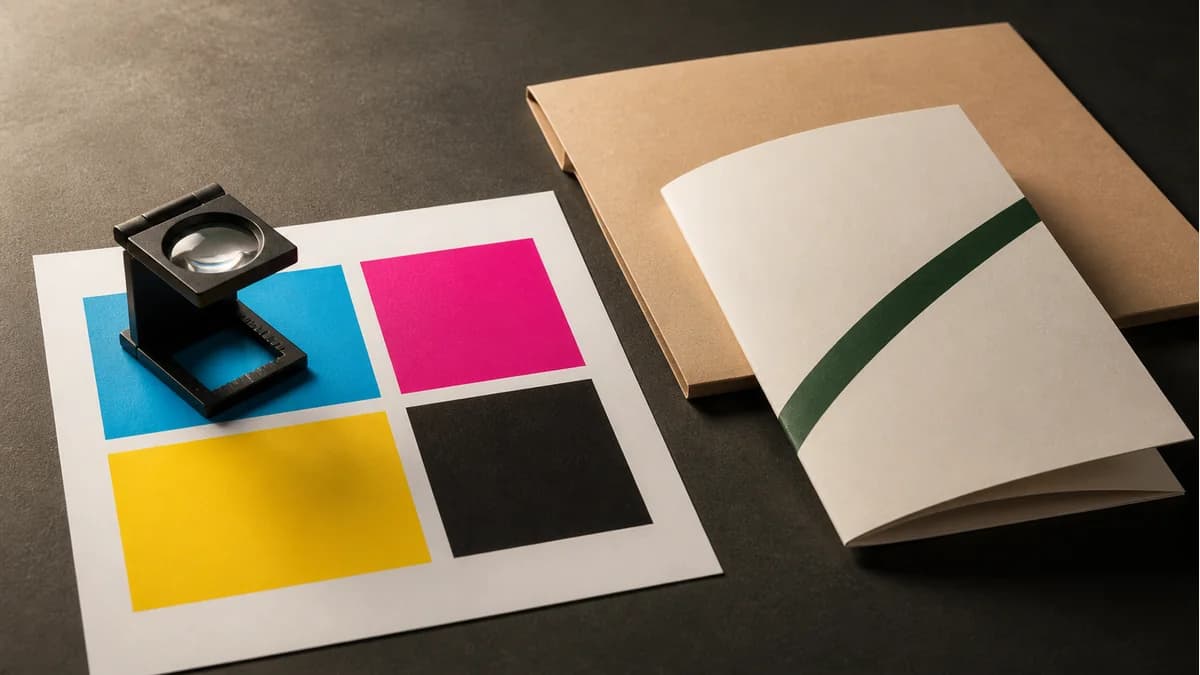
A screen view doesn’t establish the finished paper or color. Discuss those expectations early enough to choose an appropriate review method.
When several people review a job, combine their comments into one set of changes. Keep the final approval attached to the correct file so an older version cannot be mistaken for the current one.
Understand the production and delivery scope
Confirm which steps are included and whether any outside preparation, finishing or other production affects the schedule. Ask when the completed order will be handed over and in what form.
If several destinations or departments need separate packs, specify that before production. Don’t leave labeling or division of the order to an assumption at collection.
Know how a problem will be handled
Review the agreed terms for raising an issue and any proposed remedy. On receipt, compare the work with the approved specification and describe a concern with clear examples.
Keep the job reference, approved artwork and useful production details for future orders. A dependable working process makes those details easy to confirm again; it doesn’t require assuming that every repeat order is identical.