
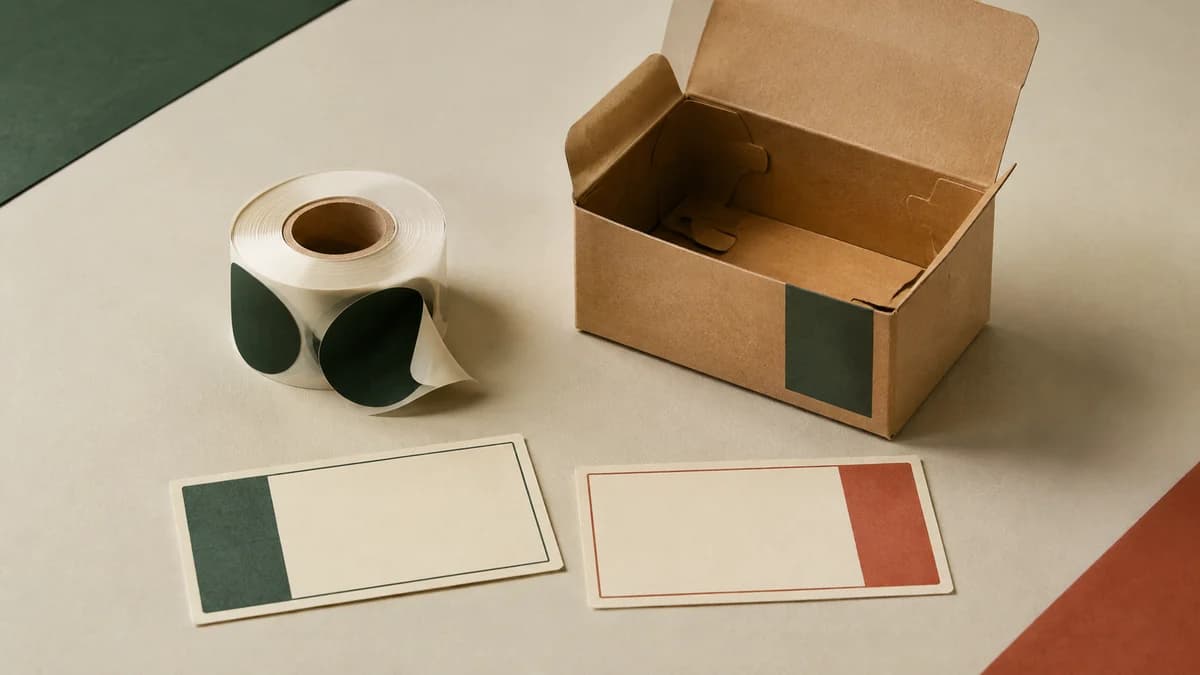
Describe the application
Provide the label size and shape, quantity and number of artwork versions. Identify whether labels will be applied by hand or by equipment, and what supply format is needed.
Include the container material and shape. Curves, seams, texture and flexibility can affect application. Describe moisture, refrigeration, cleaning, heat or outdoor exposure if those conditions apply.
Ask for a material suitable for the job
Request the proposed label stock, adhesive and relevant supplier information. A material description such as “waterproof” is not a substitute for checking the complete construction and its intended conditions.
Use a sample on the actual surface when the application is critical. Assess adhesion, appearance and readability after the handling the label is expected to receive. Agree any testing responsibility with the supplier.
Supply approved information
The business responsible for the product supplies the approved wording and any required instructions. Have the appropriate adviser review product or regulatory claims before printing.
Keep variant names, quantities, codes and artwork versions in one list. Identify who will verify barcode data and test the final printed code where it is used. Print approval should resolve these details, not leave them as placeholders.
Prepare the artwork for its real size
Check the smallest text at finished dimensions. Keep important details away from cuts and seams, and use the confirmed production template. If a finish or special shape is requested, ask what separate file information is needed.
A label can share a visual identity with inserts or other packaging without duplicating every element. Prioritize the information the reader needs on this specific component.
Keep a record for reorders
Save the approved file, material reference, quantity and supplier instructions with the order reference. Reconfirm any change to the container or conditions of use before repeating the specification.
Send a label inquiry with the surface, size, versions and intended use. The team can assess the proposed scope and confirm the available production arrangements.